The Intermission
Henry Curchod
Lotteria
20 May – 1 August, 2026
The Intermission present Lotteria, the first solo exhibition of Henry Curchod in Piraeus.
In the corner of Henry Curchod’s studio in Hackney Wick, east London, above a vast silver canvas, hangs a white jacket, the kind you’d find on a head, sous, commis, saucier or any other kind of chef across the land. Above the pocket on this garment is embroidered an emblem of a restaurant called Lotteria, the ‘o’ replaced with a shimmering yellow sun and the rest of the lettering in an italic red font like an Italian motorcar logo from the 1970s. Together, these elements suggest an easy Mediterranean glamour.
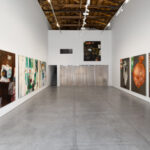
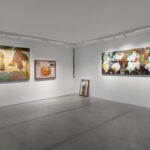
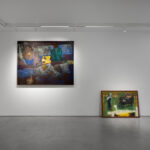
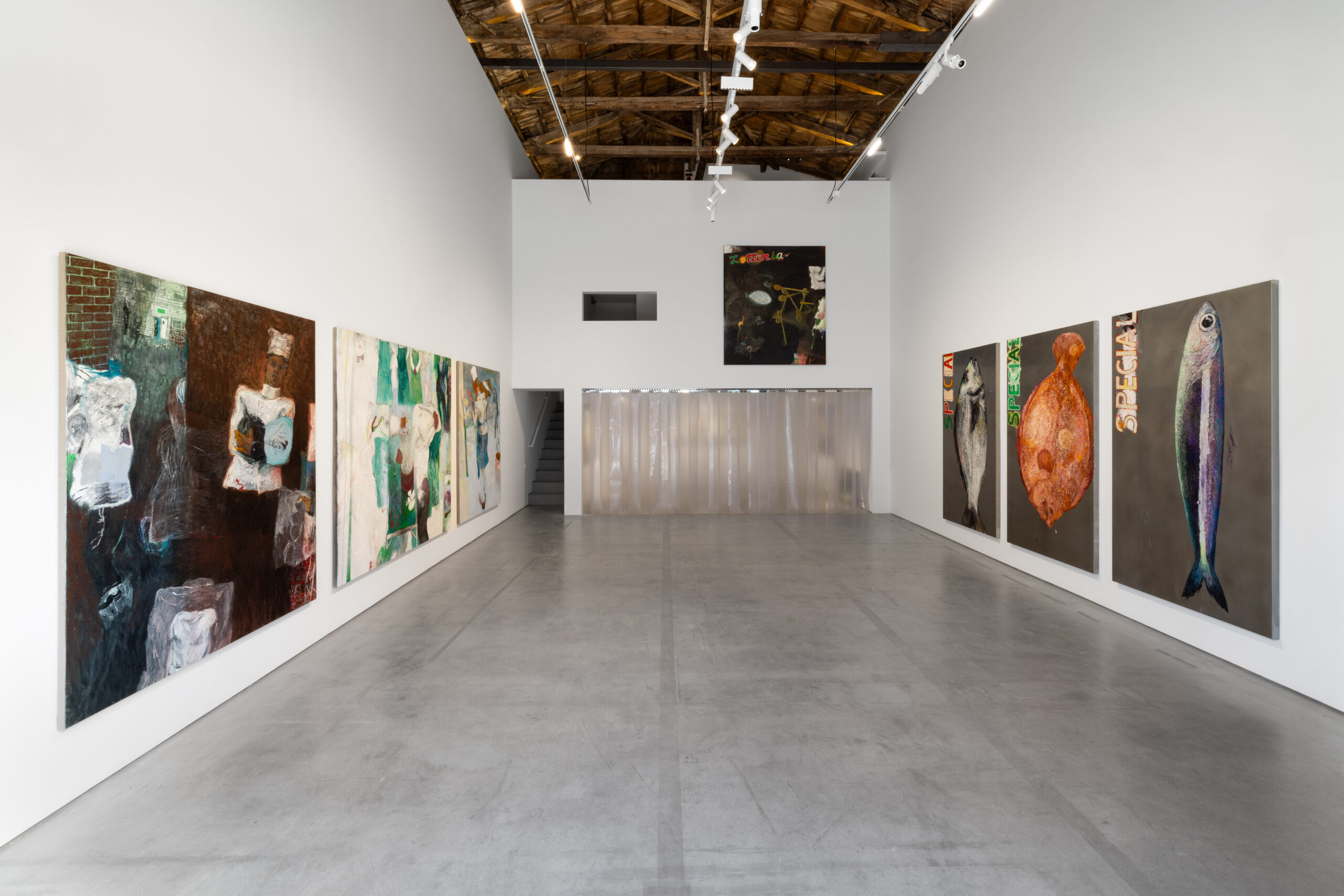
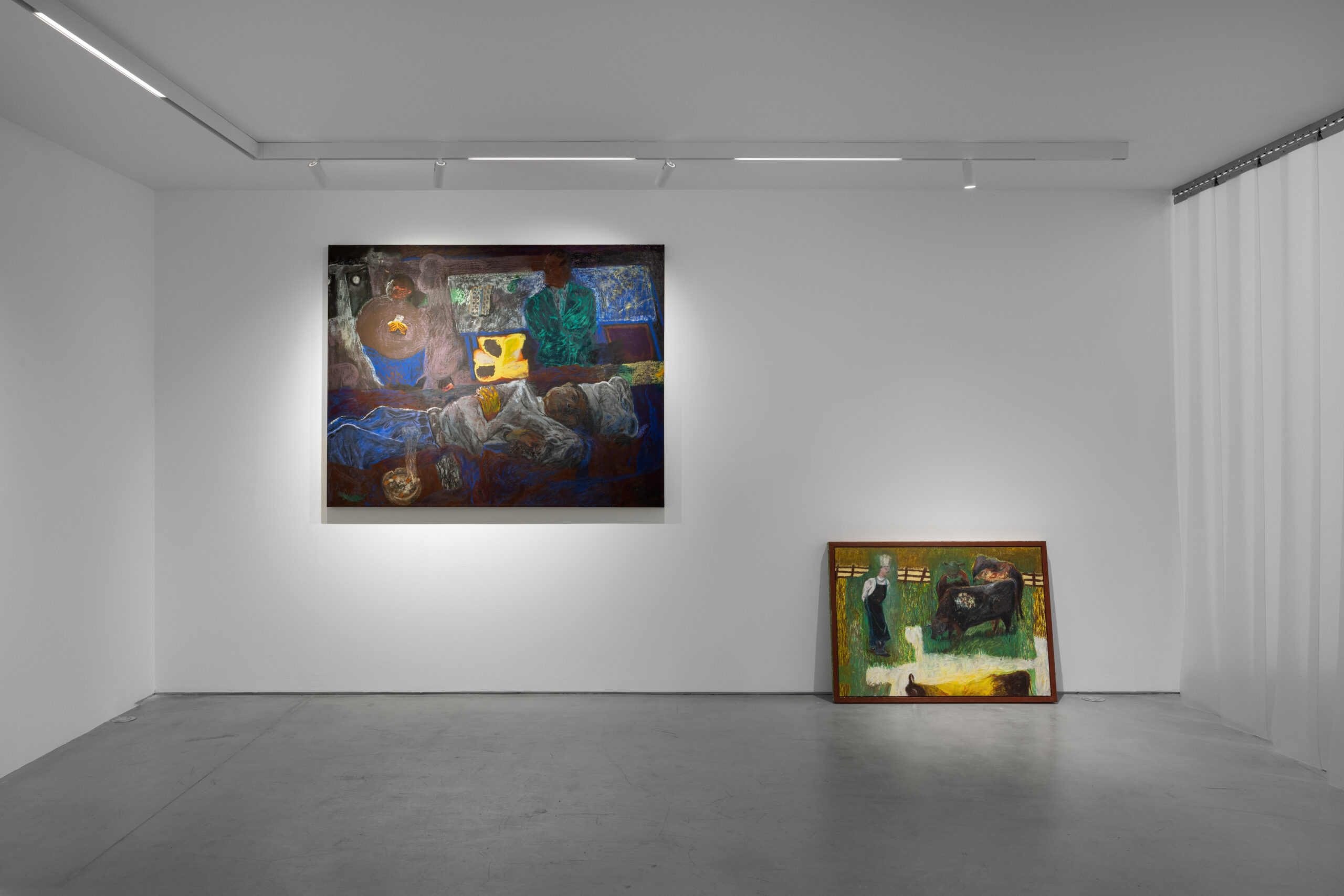
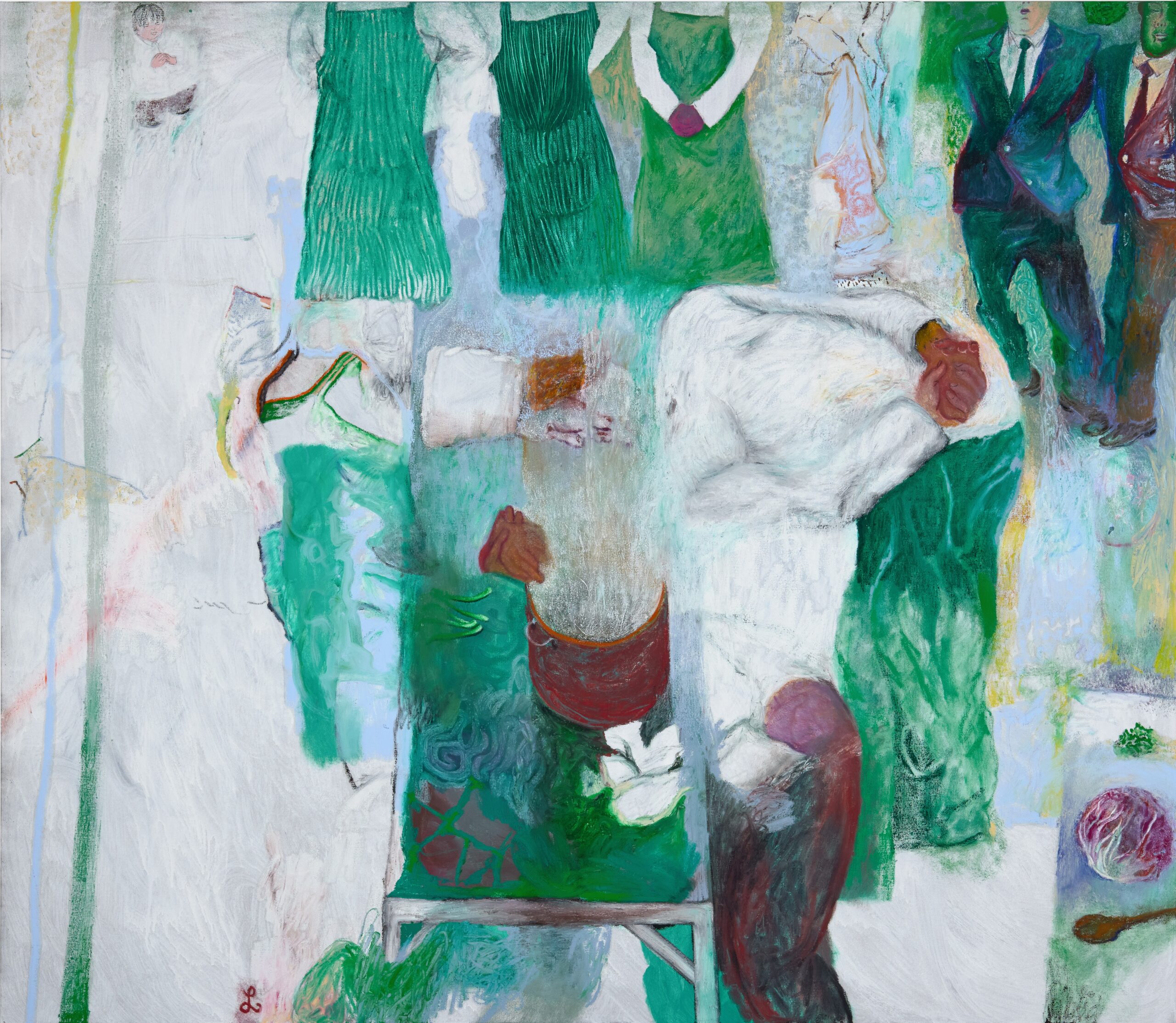
It all looks very plausible. This restaurant, in which the kitchen staff wear such a jacket as their uniform, could really exist. Only, it doesn’t exist; well, at least not yet. Lotteria is the name of Curchod’s dream restaurant, one that he very nearly opened last year before his friends in the business deterred him. He had a financial plan drawn up and everything. The restaurant, and its interior delights, prospective food and marauding clientele have become the focus of his new exhibition, ‘Lotteria’, which contains 10 oil stick, gouache and charcoal on linen paintings, one oil stick on cotton, another on copper and a vast oil stick on stainless steel countertop work.
Within this work, there is a delight in food and its relationship to community, hospitality and communion, something Curchod is well versed in as the son of a chef. Food has been central to his upbringing, which makes these paintings far from illustrative of an idea and more connected with devotional art. But there’s an irreverence here, too; it’s not that Curchod doesn’t mean this – these aren’t duplicitous works – he’s more basking in his own consciousness and the realm of fantasy and possibility, connected to his childhood but also the history of painting.
Here, the artist is, in fact, a character he calls the Blueberry Boy, who appears in two of the paintings in ‘Lotteria’. He is a spectral presence, rotund by his own admission, and a lover of food. He is young – as remembered in the mind of someone now older. Curchod is interested in ex-voto paintings, particularly those from Central and South American fishing communities, in which saintly figures appear in the corner; these works are typically produced to mark the completion of a vow or given as a devotional offering.
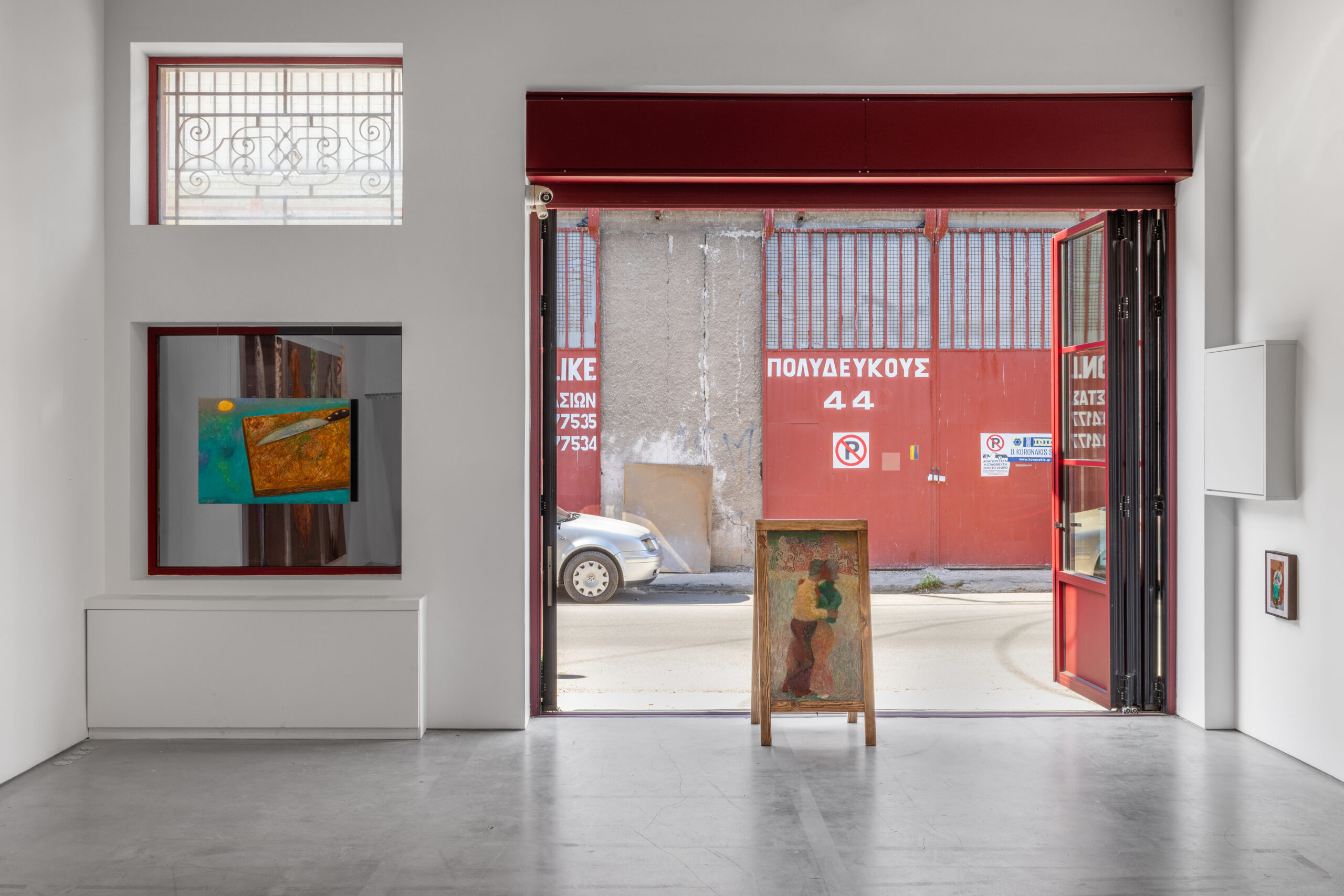
I find it useful to ask of a work what its production does for its maker, and here I feel the scale of many of the canvases is significant. Curchod, while standing close to the surface, can get lost in them. Increasingly, he creates space between motifs and allows flights of fancy to develop from the mise-en-scène that arise in his imagination: chopping boards and knives (Chopping Board on Holiday, all works 2026); onions, red and white (Mehdi [‘guided one’ in Arabic]); chefs peering into steaming pots (Hierarchy); fish – lots of fish (Monday Fish Special); and dancing wooden spoons (Lotteria at 1 AM)
To me, painting can be a finding out, in the same way that writing is. Curchod’s process engages first in drawing, then, although the sticks are oil and these works are paintings, in drawing again. The first drawings are the unravelling of the consciousness, while the second rendering is a going over, all the while close to the surface, so the outside world isn’t in view, only the direct surface in front. It’s hard not to imagine, then, that the making is a kind of Catharsis.
But finance is an issue, especially for anyone planning to set up shop in London, one of the most expensive cities on earth, which is where the names come in: Lotteria – the bricks- and-mortar restaurant – would be feasible only if Curchod were to win the lottery jackpot; therefore, we’re led to believe painting is what he can do with the means he has. He can fabricate a live and luxurious rendering of his dream eatery, using linen as a destination.
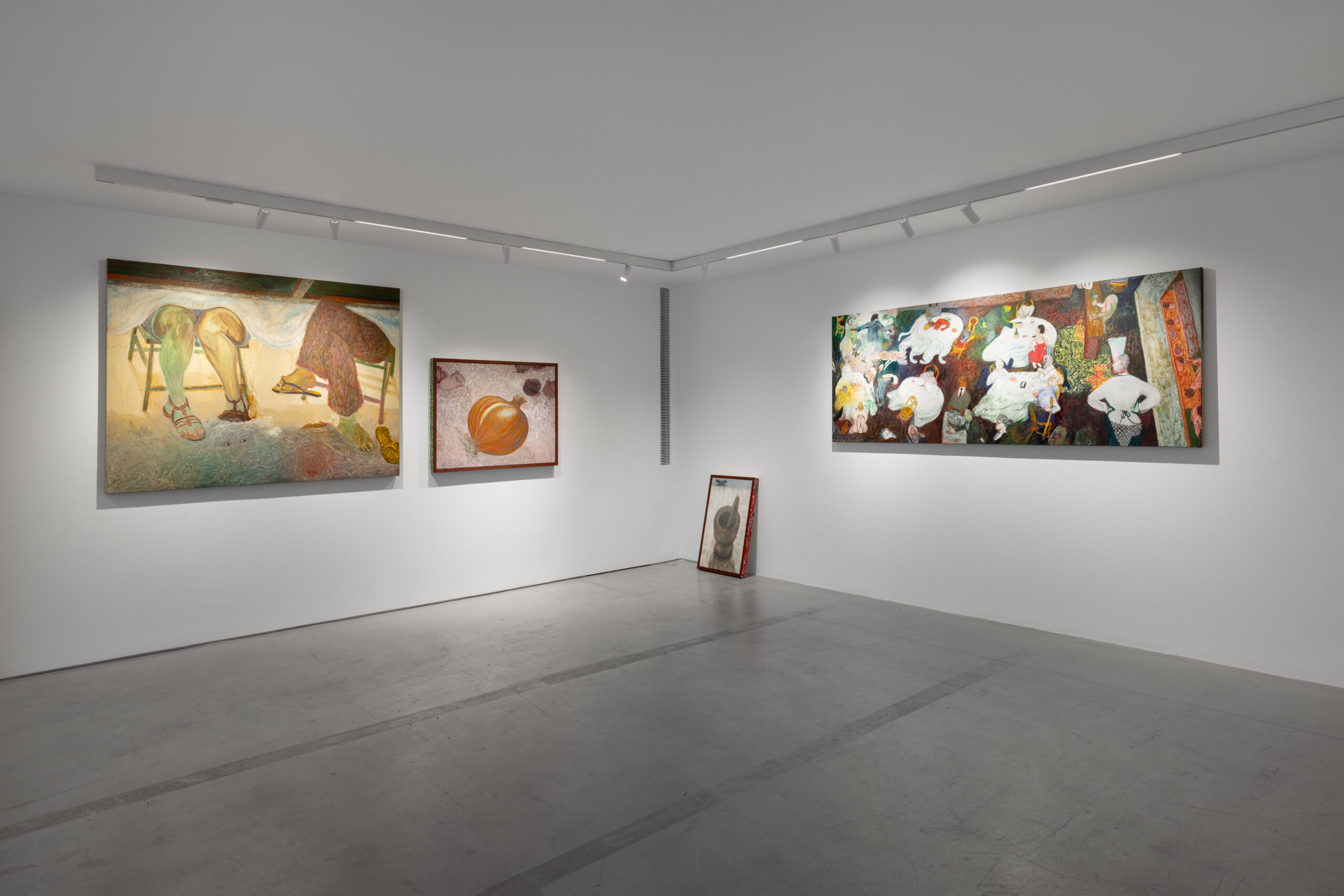
In Mehdi, a proud white onion dominates the rectangular, landscape-oriented image, with smaller red onions receding in the background, encircling the protagonist. The red ones are ganging up on the white one in this West Side Story, but the white one is indignant and centre stage, an unconventional evocation of Curchod’s Iranian grandfather, he tells me.
Meanwhile, in Chopping Board on Holiday, a loose knife lies beside a very chopped chopping board that has lived a long life of food preparation. A lone lemon lingers in the background, presumably awaiting its fate on the block. Elsewhere, we have a stoic pestle and mortar in Weighing Spice. These are works you might think of as still life, and they certainly have a relationship to historical still life paintings, but Curchod is somehow able to personify the inanimate (as a viewer, you do feel a bit sorry for the lemon).
The ambience of ‘Lotteria’ is a dynamic one, full of people, emotions, drama and the flurry of service. Nowhere is this more apparent than in The Dining Room, which recalls any number of images by fabled chroniclers of frivolity and consumption, such as Otto Dix, Chaïm Soutine and Henri Toulouse-Lautrec. Curchod tells me this is his final figurative show, a celebration of his two loves: food and painting. But I’m sure he’ll be back; it’s clearly too fun, rich and bursting with unhemmed ideas and people to be a flash in the pan.
Sean Burns is an editor and writer based in London.
Henry Curchod (b. 1992) utilises a Western upbringing and Iranian heritage as the foundation for an inquiry into the complexities of the prevailing human condition. His practice oscillates between figuration and abstraction through a playful confluence of drawing and painting, using oil sticks to interrogate surfaces ranging from linen to stainless steel. This commitment to an iteratively expanding material universe allows Curchod to explore the self as a composite —at once singular and multiple—navigating an interior landscape of increasing complexity.